South Korean Experts Witness EU Animal Welfare and Quality Standards Firsthand during Exclusive Study Trip to Poland
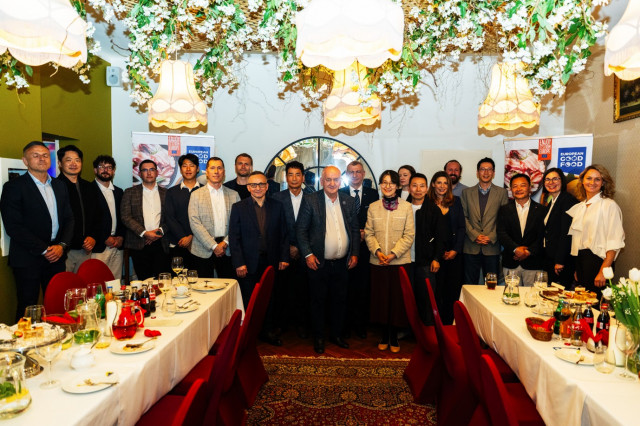
South Korean delegation participating in institutional study trip in Poland (Source: EU Good Food)
SEOUL--(뉴스와이어)--Against the backdrop of a profound shift in South Korea’s premium meat sector driven by the “Gachi-sobi” (value-based consumption) trend, a high-profile delegation of South Korean meat importers, industry leaders, and media experts embarked on an institutional Study Trip to Poland from May 10 to May 15, 2026.
Organized within the framework of the “EU Good Food - Good Life” campaign, this intensive five-day itinerary provided the delegation with a transparent, firsthand verification of the rigorous production and ethical standards that govern European meat from Poland.
A Distinguished Delegation of Industry Authorities
The South Korean delegation represented strategic cross-sections of the nation‘s meat sector, ensuring that the insights gained would directly inform trade and market practices. The delegation included the Secretary General of the Korea Meat Import Association (KORMIA), the Editor-in-Chief of Meat Journal and Meat News, the Representative Director of LEAH TRADING, the CEO of Choice Foodtech, the Director of INO Meat Co., Ltd., and a prominent lifestyle and food influencer. Together, these industry leaders brought expertise spanning meat imports, media and market intelligence, food technology, distribution, and consumer engagement, reflecting the breadth and influence of South Korea’s meat industry.
Verifying “Farm-to-Fork” Integrity at Leading Production Plants
To evaluate technical excellence and consistency in the European meat processing sector, the delegation conducted a series of comprehensive on-site inspections and specialized oversight across Poland’s benchmark meat production facilities.
The highlight of this field research involved detailed surveys at major processing complexes, including the Mościbrody Meat Plant, the Poultry Plant in Stasin, and the Wierzejki Meat Plant in Trzebieszów. At each destination, the South Korean experts scrutinized automated processing lines, multilayered quality control systems, and strict veterinary supervision protocols aimed at ensuring the highest levels of food safety and product consistency. Consequently, the tour vividly demonstrated how European production facilities harmoniously combine advanced automated technologies with long-standing farming traditions, offering a comprehensive look at a completely transparent supply chain from farm to fork.
High-Level Institutional Alignment and Retail Benchmarking
A pivotal moment of the study trip took place on May 13, when the delegation was officially received at the Ministry of Agriculture and Rural Development in Warsaw. This high-level meeting fostered strategic discussions regarding trade frameworks, veterinary collaboration, and the strict alignment of Polish agricultural output with the sustainability goals of the European Green Deal.
Following the ministerial briefing, the delegation conducted targeted retail store checks across major hypermarkets and supermarket chains. This field research allowed the Korean experts to analyze the European retail landscape, packaging standards, cold-chain logistics, and the continuous traceability protocols mandated by the EU's “Hygiene Package”.
Culinary Versatility and Gastronomic Integration
Beyond technological verification, the delegation experienced the gastronomic properties of European raw materials through curated culinary integration sessions. These sessions demonstrated the exceptional texture, natural juiciness, and refined marbling of European beef and pork from Poland, proving its seamless adaptability to both traditional local dishes and contemporary global cuisine.
Securing Trust for the Korean Premium Market
Reflecting on the journey, the delegation noted that the high breeding standards regulated by Directive 98/58/EC - which guarantees the “five freedoms” of livestock - are directly responsible for the superior sensory profile of the meat. By eliminating synthetic growth promoters and maintaining strict control over animal environments, European production delivers a product that perfectly satisfies the ethical and quality demands of the modern Korean consumer.
The “EU Good Food - Good Life” campaign (2024-2027) continues to serve as an essential trade and educational bridge, reinforcing the confidence of South Korean importers in the safety, ethics, and premium quality of agricultural products from the European Union.
For more information about European production standards, please visit: EUGoodFood.eu.
For the latest updates, events, and campaign news, follow EU GOOD FOOD on social media:
· Facebook: Eugoodfoodkorea
· YouTube: EUGoodFood_Korea
· LinkedIn: Eugoodfoodkorea
Funded by the European Union. Views and opinions expressed are how ever those of the author(s) only and do not necessarily reflect those of the European Union or the European Research Executive Agency (REA). Neither the European Union nor the granting authority can be held responsible for them.